Concrete generates heat as it cures. How much, how fast and how evenly determines whether a placement gains strength on schedule, cracks from thermal stress, or fails to protect itself through a cold night. Temperature is the one variable that tells you all of it — and it is still the variable most jobs measure with a probe on a wire and a clipboard.
HardTrack replaces that with wireless sensors embedded in the pour, streaming temperature continuously to a dashboard you can open from anywhere. When a placement drifts outside its limits, the system tells you while there is still time to do something about it.
Why temperature is worth watching
Thermal cracking in mass concrete. A thick section holds its hydration heat. The core runs hot while the surface sheds heat to the air, and the differential between them — not the peak temperature alone — is what drives cracking. Specifications set limits on both. Meeting them means knowing core and surface temperatures continuously, not once a shift.
Cold-weather protection. Concrete held below its protection temperature gains strength slowly or not at all, and freezing early does permanent damage. Blankets and enclosures work — but only while they are actually working. A corner of a tarp that lifted overnight is invisible until someone walks the deck in the morning. A sensor under the protection tells you at 2 a.m.
Hot-weather placements. High ambient temperature accelerates set, shortens working time and raises peak core temperature. Monitoring lets you see the effect of mix adjustments and placement timing directly, instead of inferring it from break results a week later.
Schedule decisions. Temperature history is also the input to maturity. The same sensors that keep a placement inside its thermal limits produce the in-place strength estimate used to strip forms, post-tension, or open to traffic — under ASTM C1074, with the documentation to defend it.
How HardTrack does it
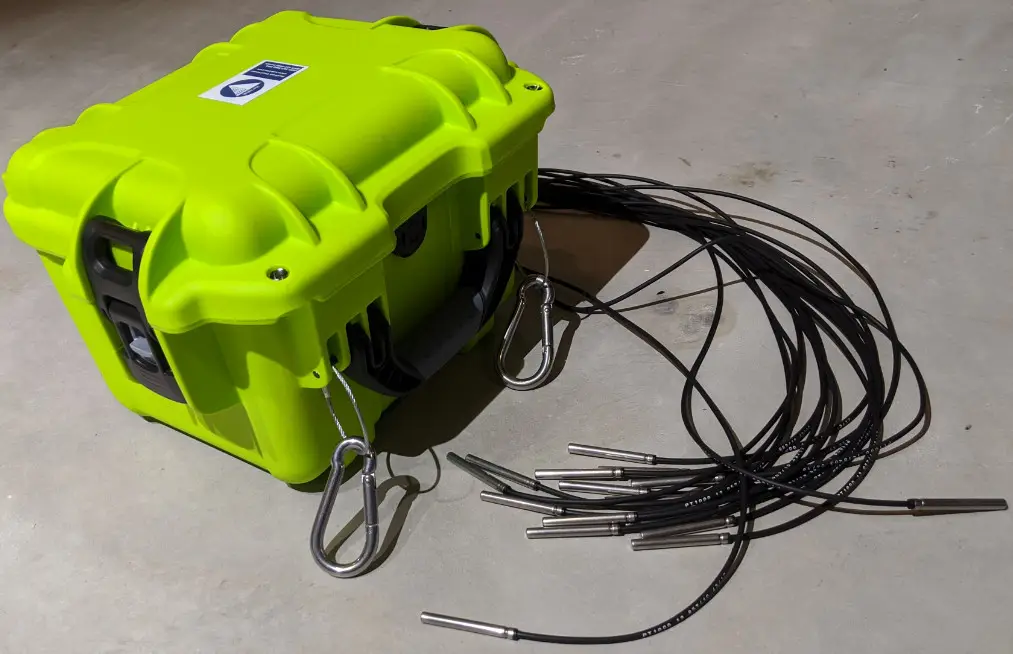
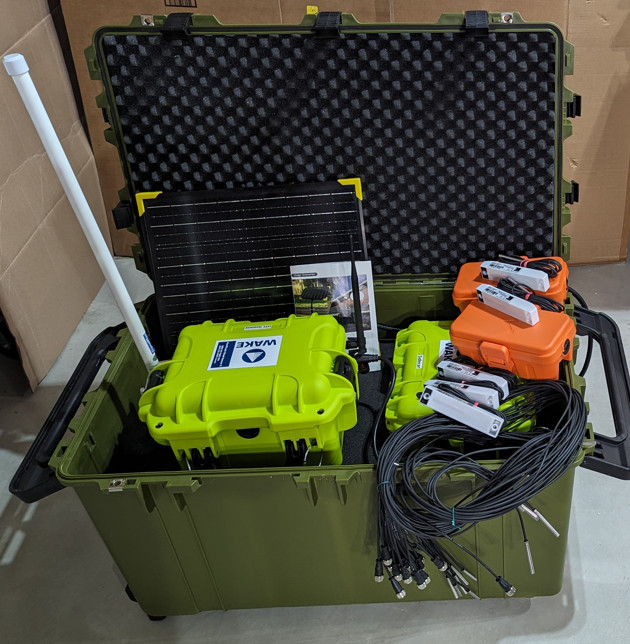
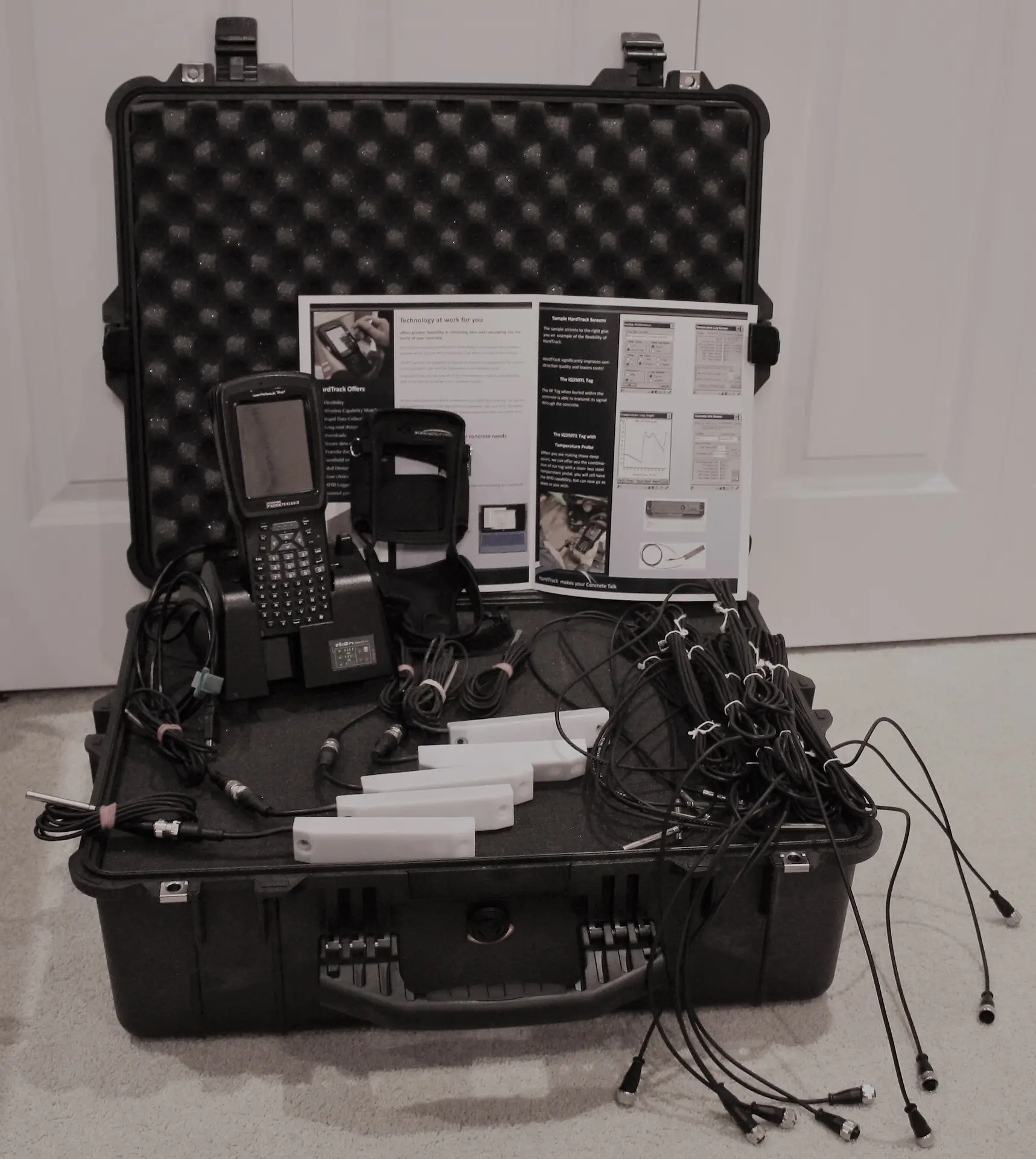
Probes go in before the pour and stay in the concrete. The sensor logs temperature continuously and uploads it — over cellular from the sensor itself, through an on-site gateway, or by walking the deck with a handheld reader where no network reaches. Data lands in the HardTrack dashboard and exports to Excel for submittals.
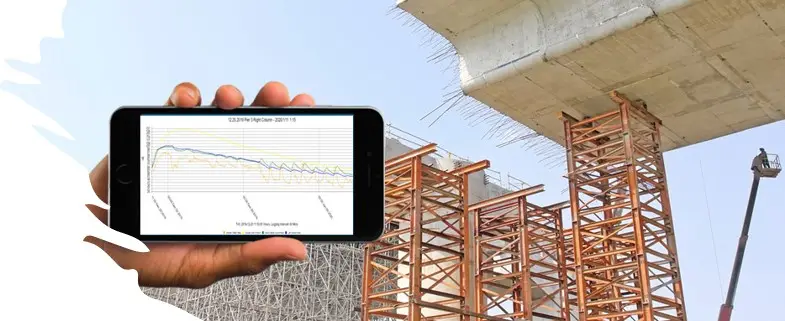
Alerts are the part crews actually use. Set a maximum core temperature, a maximum differential, or a minimum protection temperature, and the system notifies you when a placement crosses it. Not the next morning.
Where it gets used
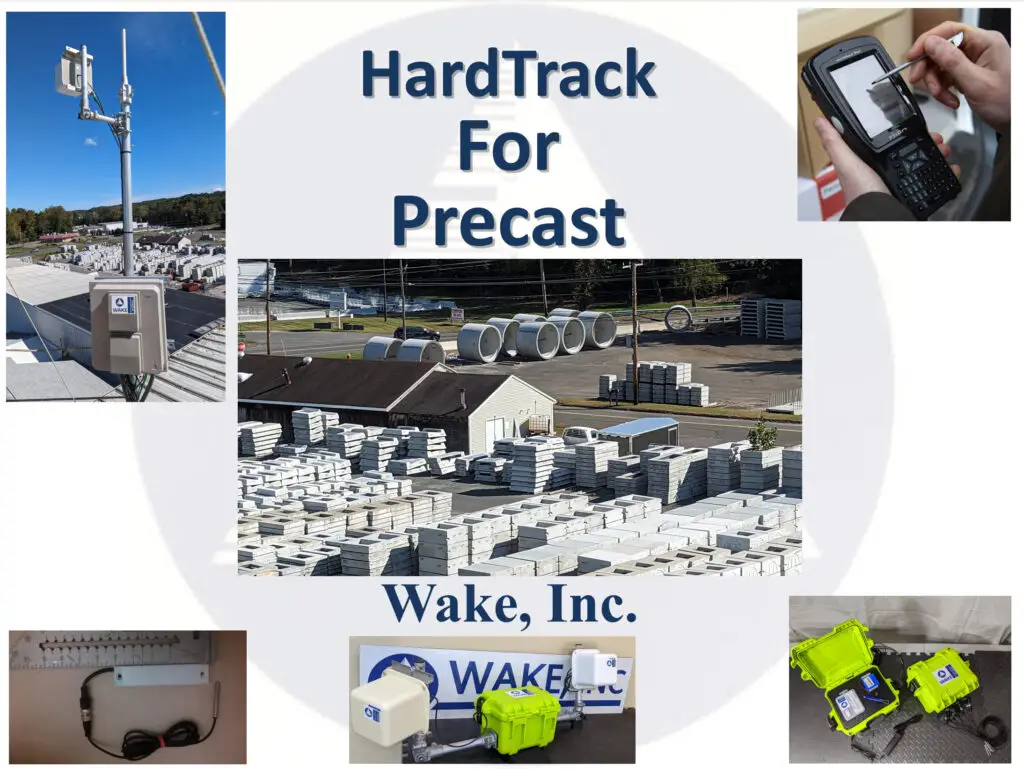
Bridge decks and substructures. Mass placements in foundations, piers and pile caps. High-rise cores and post-tensioned slabs. DOT work carrying a thermal control plan. Precast and prestressed yards turning multiple beds a day. Wake has supported placements like these on thousands of projects across more than 35 years.
Further reading: how to monitor mass concrete temperature, setting up a curing temperature alert system, and choosing a wireless concrete temperature sensor.