A bridge deck poured before sunrise can look fine by midmorning while its curing conditions tell a very different story. When temperature drops overnight, insulation shifts, or heat from hydration climbs faster than expected, waiting until the next site visit creates a blind spot. Knowing how to track curing remotely gives the project team live evidence of what the concrete is experiencing, when it is gaining strength, and whether action is needed before schedule or quality is affected.
Remote curing monitoring is not simply checking a weather forecast from the office. It is a field measurement program that captures in-place concrete temperature, relates that history to maturity and strength when properly calibrated, and makes the resulting data available to the people responsible for the work. For high-consequence placements, that visibility can replace assumptions with documented decisions.
How to Track Curing Remotely From the Pour Forward
The process begins before concrete arrives. Monitoring is most effective when the placement team identifies the decisions the data must support: form removal, post-tensioning, traffic opening, insulation changes, thermal-control actions, or specification documentation. Those decisions determine where sensors belong, how often readings are needed, and who receives alerts.
Embedded temperature sensors should be installed at representative locations before placement. On a mass placement, that usually means monitoring both the anticipated hot core and the cooler surface region. On a bridge deck or slab, crews may focus on locations most exposed to wind and overnight temperature loss. Precast operations often monitor critical products or areas within a curing cycle rather than treating every form identically.
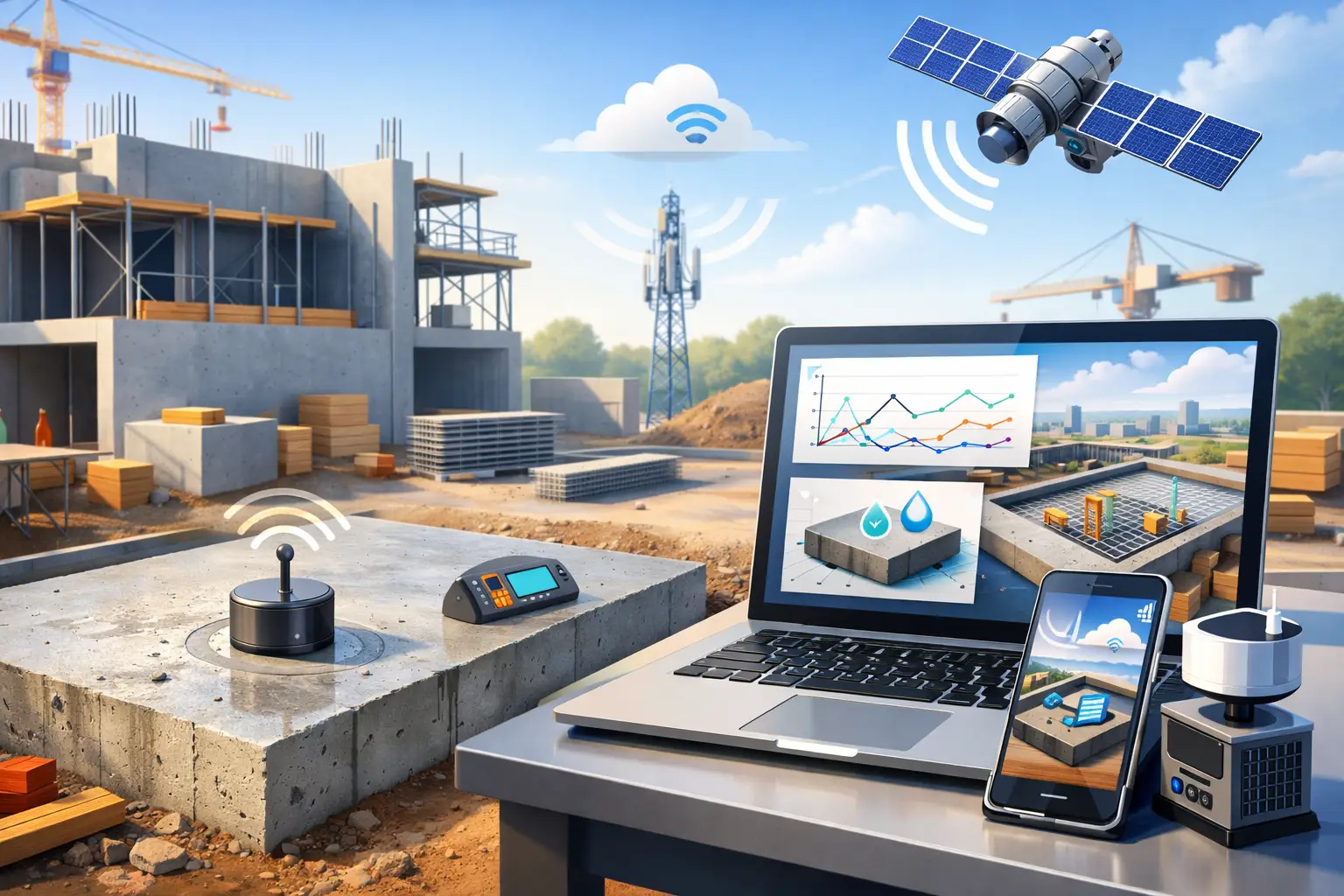
Once concrete is placed, a wireless logger, cellular sensor, or gateway collects the readings and sends them to a cloud dashboard. Field teams can then see current temperatures and historical trends without retrieving a data logger, exposing a wire, or driving back to the jobsite. The configuration matters: a remote mountain project may need cellular-connected sensors, while a large precast yard may use reusable wireless loggers and a centrally located gateway.
The goal is not to add another screen for the superintendent to watch. It is to deliver useful information at the point a decision is required.
Measure the Conditions That Actually Affect Curing
Concrete curing is influenced by time and temperature, but the right monitoring plan also considers the placement geometry, mix design, ambient exposure, curing method, and project specification. A single ambient thermometer cannot confirm what is occurring inside a thick footing, a pier cap, or a heavily insulated wall.
In-place temperature monitoring reveals the thermal history of the concrete itself. That matters in both directions. Cold concrete can gain strength too slowly for the planned construction sequence. Excessive internal temperature, especially when paired with a steep temperature differential between core and surface, can raise durability and cracking concerns. Remote measurements provide the trend early enough to adjust blankets, heaters, cooling measures, or sequencing while those actions can still make a difference.
For many projects, the most useful remote view combines concrete temperature with local weather information. GPS-specific National Weather Service data can help the team anticipate a cold front, hot afternoon, or overnight exposure event. Weather data does not replace in-place readings, but it adds context for planning the next shift.
Use maturity when strength decisions are on the line
Temperature alone does not establish compressive strength. ASTM C1074 maturity testing uses the concrete's time-temperature history and a project-specific strength relationship to estimate in-place strength. When the maturity relationship is developed and verified correctly, the project team can use maturity data to support decisions that would otherwise wait on laboratory cylinders.
That distinction is critical. Maturity is not a shortcut around quality control, and it does not eliminate the need to follow the project specification, testing plan, or owner requirements. It is a method for connecting measured in-place curing history to strength performance. The value is greatest when crews need timely, defensible answers about whether concrete has reached the required strength for the next operation.
A well-run program documents the mix identification, sensor locations, placement times, calibration inputs, and maturity results. This gives QA personnel, inspectors, and owners a traceable record rather than an after-the-fact explanation.
Set Alerts Around Decisions, Not Just Temperatures
Raw data becomes operationally useful when the system tells the right people what deserves attention. Set alert thresholds based on the placement plan and specification requirements, such as minimum curing temperature, maximum concrete temperature, a core-to-surface differential, loss of communications, or a maturity target needed for stripping forms.
Alerts should be assigned with the jobsite response in mind. If a deck temperature falls below the planned minimum at 2:00 a.m., the notification needs to reach the person authorized to inspect the curing protection and mobilize corrective action. If a precast member reaches its release-strength target, the production team needs that information before the next shift loses time waiting for a test result.
Too many alerts create noise, and overly broad thresholds encourage teams to ignore them. Start with the limits that directly affect safety, quality, and schedule. Refine the alert plan after the first few placements based on actual field conditions.
Choose a Deployment That Fits the Project
There is no single hardware arrangement for every concrete job. The best approach depends on communications coverage, access to the placement, duration of monitoring, and whether sensors will be reused.
For isolated infrastructure pours, embedded cellular-connected sensors can transmit directly to the cloud and avoid daily site visits. For large placements with multiple monitoring points, reusable wireless loggers can collect signals from embedded sensors and send them through a portable or solar-powered gateway. For QA teams moving between active placements, a handheld reader may be the practical option when immediate data collection is needed on site.
HardTrack supports these deployment approaches in one monitoring platform, so teams can apply the same reporting workflow to an overnight bridge pour, a remote foundation, or a high-volume precast operation. The common requirement is reliable data capture without exposed rebar wiring that can be damaged during placement or finishing.
Before deployment, confirm the communication path, sensor identification process, and dashboard access for every stakeholder who needs the data. A monitoring system only saves time when the project engineer, field superintendent, testing team, and inspector can work from the same current record.
Turn Live Readings Into Defensible Records
Remote monitoring should reduce paperwork, not create another disconnected file to reconcile at closeout. Build the reporting process into the plan before the pour. The record should show the temperature history, maturity calculations where applicable, sensor locations, alarm events, and the dates and times associated with key construction decisions.
Specification-ready Microsoft Excel reporting is often valuable because it gives project teams a familiar format for review, submittals, and permanent records. Reports should be generated consistently, whether the placement is routine or a high-profile pour that requires frequent owner updates.
Keep the documentation tied to the field workflow. If formwork is removed based on an in-place maturity result, record that result with the release decision. If a cold-weather alert leads to added protection, preserve the temperature trend before and after the response. These details show that the team monitored the placement, recognized changing conditions, and acted on measured information.
Avoid the common remote-monitoring mistakes
The most common mistake is treating remote monitoring as a replacement for a curing plan. Sensors report conditions; they do not install blankets, maintain moisture, or correct a poor placement sequence. The plan must still define acceptable limits and corrective actions.
Another mistake is placing every sensor in the most convenient location. A sensor near an edge may be right for assessing surface cooling but may not represent the peak temperature in a massive element. Select locations according to the risk being evaluated.
Finally, do not wait until a strength deadline to verify that data is transmitting and the maturity relationship is available. Confirm the system during setup, then review the first readings shortly after placement. A small check early prevents a major gap when the schedule depends on the answer.
Remote curing tracking gives concrete teams control when the placement is out of sight but cannot be out of mind. Put the sensors where the risk is, connect the data to the decisions that matter, and let the curing record keep working long after the crew leaves the site.