
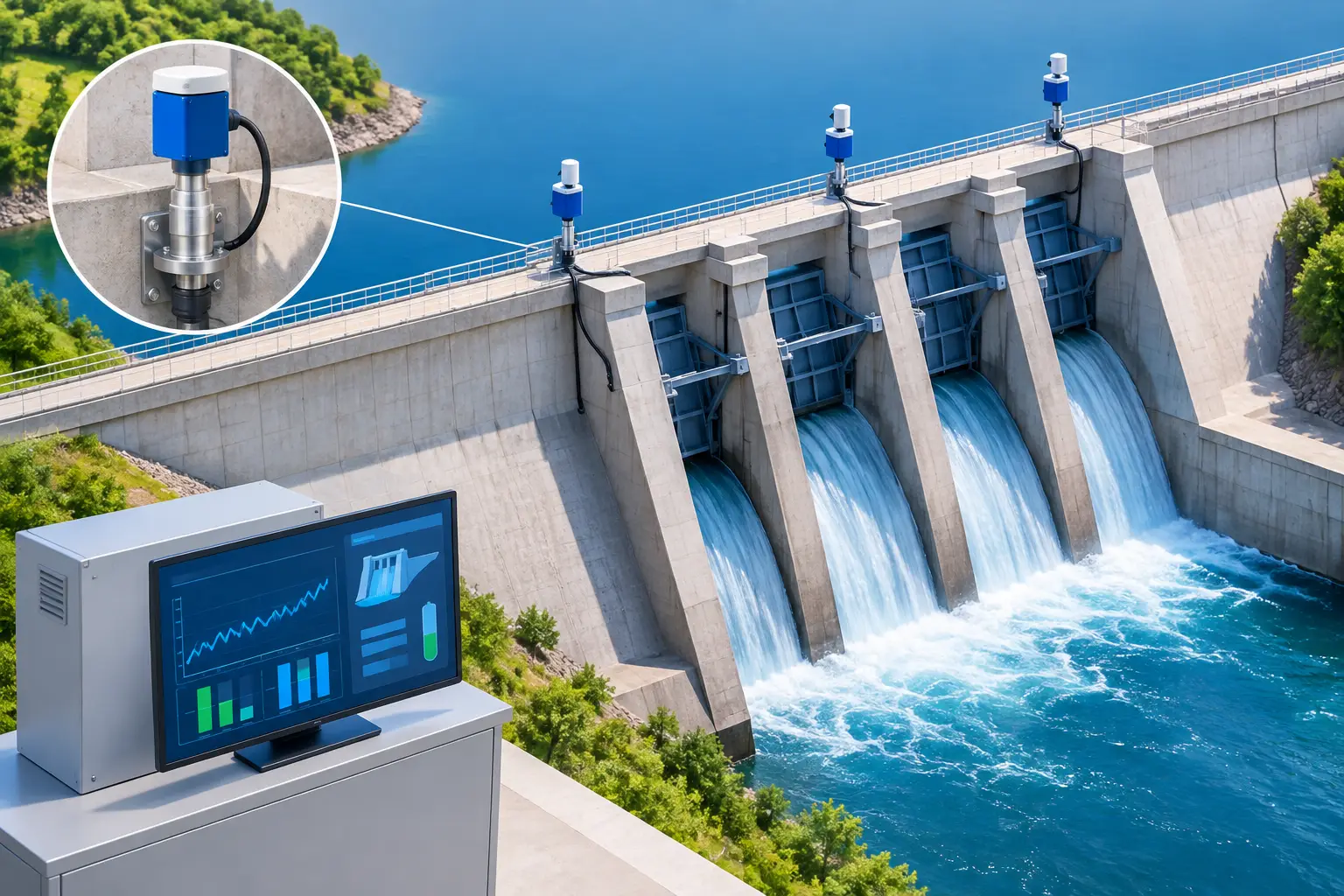
A dam placement can continue for hours, days, or longer. Once concrete is inside a lift, the job changes from placement logistics to control: heat development, temperature differentials, curing conditions, strength gain, and the documentation needed to support the next operation. Dam pour instrumentation gives the project team direct evidence of what is happening inside the concrete, not just an assumption based on ambient conditions or cylinder results.
For mass concrete work, that evidence protects far more than a test result. It helps teams manage lift sequencing, form removal, post-cooling decisions, joint preparation, and schedule commitments without sending personnel into difficult or remote areas simply to collect readings.
Why dam pour instrumentation matters
Dam concrete is not a single, uniform condition. A large placement may contain multiple lifts, placement zones, elevations, mix designs, and exposure conditions. The center of a thick lift can retain heat long after the surface has begun to cool. Areas near cooling pipes, lift joints, forms, or exposed edges can behave differently from the interior.
That variation creates two separate, connected concerns. The first is thermal control. Hydration heat can drive internal concrete temperatures upward, while surface cooling can create temperature differentials that raise the risk of thermal cracking. The second is strength development. Project teams need reliable confirmation that concrete has reached the required in-place strength before they load a section, remove forms, advance construction, or open a critical work area.
Traditional methods provide only part of the picture. Cylinders are necessary when required by the specification, but they represent laboratory or field-cured samples, not necessarily the temperature history of concrete in the lift. Manual temperature checks can identify a condition at one point in time, but they require site access, labor, and a consistent collection process. For a large or remote dam site, those gaps add up quickly.
Instrumentation makes concrete behavior visible while it still matters operationally. Rather than discovering a thermal issue after a shift change or waiting on a scheduled break, the team can see current conditions and act against defined limits.
What to measure in a dam concrete placement
A useful monitoring plan starts with the decision it must support. If the project needs to control peak temperature and core-to-surface differential, sensors need to represent both the hottest expected interior locations and the most rapidly cooling exterior zones. If the team also needs in-place strength estimates, the data must support an ASTM C1074 maturity program that has been calibrated for the approved mix design.
Temperature sensors are commonly positioned at different depths through the lift. A typical profile may include a core location, an intermediate location, and a near-surface location. The right spacing depends on lift thickness, cementitious system, placement temperature, insulation, cooling strategy, ambient exposure, and the thermal limits in the project specification.
Instrumentation should also account for the placement sequence. A sensor installed near a construction joint may answer a different question than one placed at the center of a monolith. The former may help evaluate surface cooling and readiness for subsequent work; the latter may help identify peak internal temperature and validate cooling performance. Labeling every sensor by lift, block, elevation, and location is not paperwork for paperwork's sake. It is what turns thousands of readings into usable construction records.
For strength control, maturity sensors should be installed where the strength decision will be made. That might include locations supporting formwork removal, structural loading, prestressing operations, or access by equipment. The maturity method converts the recorded temperature history into a maturity index, then estimates in-place strength using the project-specific strength-maturity relationship.
Temperature monitoring and maturity are not the same thing
A common mistake is treating any temperature sensor as a complete strength-verification system. Temperature data is essential, but ASTM C1074 maturity testing requires more than a temperature record. The project needs a documented strength-maturity curve based on testing of the actual concrete mixture, along with defined procedures for sensor installation, data collection, and acceptance decisions.
Likewise, maturity does not replace a thermal control plan. Concrete may achieve strength rapidly while still exceeding maximum temperature or differential limits. A placement can also remain within thermal limits yet gain strength more slowly than expected because of mix design, low initial temperature, or curing conditions.
The strongest dam pour instrumentation program uses both views together. Temperature monitoring helps protect the concrete from thermal distress. Maturity monitoring provides a time-based, in-place estimate of strength development. When both datasets are available in one reporting workflow, the project can make faster decisions without confusing one acceptance criterion for another.
Build the monitoring plan before concrete arrives
The best time to solve an instrumentation problem is before reinforcement, cooling lines, embeds, and placement crews crowd the work area. The monitoring plan should identify sensor locations, installation responsibilities, data collection intervals, alert thresholds, reporting requirements, and the people authorized to act when a limit is approached.
For major placements, teams should establish four items before the pre-pour meeting:
- Maximum concrete temperature, allowable temperature differential, and the locations used to evaluate each limit.
- Maturity-based strength thresholds tied to specific construction activities.
- Sensor naming conventions that match the lift and block identification used in daily reports.
- Escalation procedures for sensor damage, lost communications, unexpected heat development, or out-of-range readings.
This preparation matters because a sensor without a defined action is just a data point. If the core temperature rises toward the project limit, the team should already know whether the response involves adjusting cooling water, changing insulation, modifying curing, delaying a subsequent lift, or notifying the engineer. If a monitored location reaches the required strength, the release process should be clear enough that the field team does not wait for someone to manually assemble the evidence.
Wireless data changes the jobsite workflow
Wired thermocouples have long been used for mass concrete monitoring, but exposed wire leads create practical problems. They can be damaged during placement, snagged by equipment, buried under subsequent operations, or require personnel to return repeatedly to a readout location. On a complex dam site, every manual route adds time and safety exposure.
Wireless embedded sensors and reusable loggers reduce those field constraints. A properly selected system can capture temperature histories at the required interval, transmit data through a portable gateway or cellular connection, and make the results available to the people who need them without a daily trip to every instrument location.
That does not mean every dam project needs the same hardware. A compact placement with reliable access may be well served by a local wireless logger and handheld reader. A remote lift, overnight placement, or large multi-block operation may benefit from cellular-connected sensors and automated alerts. The deciding factor is not the technology label. It is whether the system keeps data flowing through the actual site conditions, including distance, terrain, power availability, weather, and communication coverage.
Wake's HardTrack platform is built for this kind of field decision-making. Embedded wireless sensors can document curing temperature and maturity data without exposed rebar wiring, while cloud visibility gives QA teams, superintendents, owners, and inspectors access to the same current record. Automated alerts help direct attention to conditions that need action instead of requiring teams to search through raw readings.
Make the records defensible
Dam work often has a long documentation tail. A question about a placement may arise weeks, months, or years after the concrete was placed. Screenshots and handwritten temperature logs are difficult to audit at that point, particularly when sensor locations or time references are unclear.
A defensible record connects the sensor to the concrete, the concrete to the approved mix, and the monitoring data to the acceptance decision. It should show placement identification, sensor location, recorded temperature history, maturity calculations where applicable, strength estimates, limit thresholds, and any exception or corrective action. Time stamps matter. So does keeping the records in a format that can be reviewed without reconstructing the story from multiple devices and notebooks.
Specification-ready reporting is especially valuable when multiple stakeholders are involved. The field team needs a fast answer during construction. QA needs traceability. The engineer and owner need confidence that the project followed the approved control plan. One organized report can serve all three purposes when it is generated from the monitored data rather than assembled by hand after the fact.
Instrument the decisions that carry risk
Not every location needs the same density of instrumentation. Over-instrumenting low-risk areas can create unnecessary installation and reporting work, while under-instrumenting critical zones leaves teams blind where the consequences are highest. The right approach is risk-based: focus monitoring on thick lifts, high-heat mixes, constrained zones, exposed surfaces, construction joints, and locations that govern the schedule.
Before the next major lift, ask a practical question: what decision would be hardest to defend if the data were missing? Place the instrumentation where it answers that question. When the concrete starts talking, the project team can control the work with evidence instead of estimates.